


お知らせ
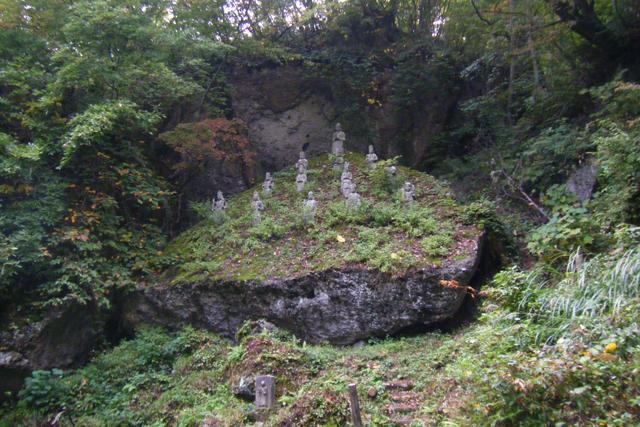
Kannon Rock - Thirteen Buddhas
2011年11月17日
				<a href="https://qnsmjrftzzddmdtbzmih.supabase.co/storage/v1/object/public/site-images/articles/takahata/log-257870-01.jpg" target="_blank"><img src="https://qnsmjrftzzddmdtbzmih.supabase.co/storage/v1/object/public/site-images/articles/takahata/log-257870-01.jpg" style="max-width:480px;" alt="Kannon Rock - Thirteen Buddhas: Image"></a>


			</div>


										<p>
				It is said that during the Daidō era (806~), when Priest Tokuitsu was engaged in local missionary work, he stopped by this mountain. A Kannon statue appeared in his dream, prompting him to carve and enshrine a Senju Kannon himself. This was the first Kannon statue among the Thirty-Three Kannon, and it is said to be the origin of Kannon Rock. Keishō-ji Temple on this mountain is believed to have been founded in Tenshō 1 (1573). Centered around these Saikoku Thirty-Three Kannon, rock-touring courses connecting the Thirteen Buddhas, Enmei Kannon, Senjōjiki, and other sites have been developed, along with walking paths leading to Hiruzawa Lake.<br><br>◆ Saikoku Thirty-Three Kannon - It is said that during the Bunka era (1800s), a local shrine carpenter named Toda Hanshichi, deeply devoted to Kannon worship, carried Kannon statues one by one from Akayu (present-day Nanyō City) and enshrined them. His memorial statue was erected in Showa 7 (1932).<br><br>◆ Thirteen Buddhas - Funds were collected from devout believers residing in the nearby area, and these statues were enshrined near the Enmei Kannon statue in Showa 7 (1932).<br><br>◆ Enmei Kannon - Artist Okuyama Ryōmei, a native of this town, completed this work in Showa 46 (1971) after a year of effort on the rock commonly known as "Shio-iwa" (Salt Rock), in prayer for the prosperity and peace of his hometown. With a height of 12m and a width of 4m, it is unparalleled as a line carving.<br><br>◆ Senjōjiki - This is a cave large enough for dozens of people, where Jomon and Yayoi period pottery has been excavated, indicating it was a dwelling for ancient people. It is also known as Hyōjō-iwa (Consultation Rock) because in Bunkyū 3 (1863), when Yashiro-gō feared becoming a private domain of Yonezawa, farmers from 35 villages, led by their headmen, secretly conspired to protest there.<br><br>				</p>